

by Captain Terry Fisher
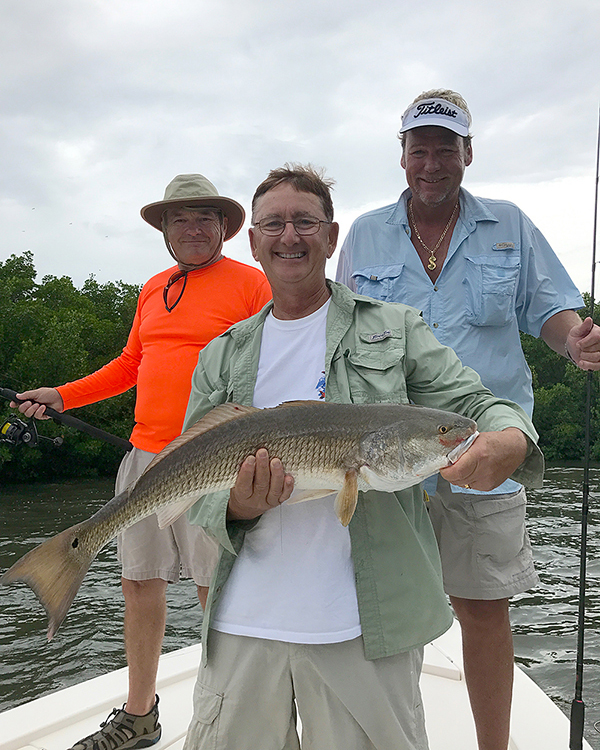
Now is the time! Those looking for opportunities to catch big Redfish – now is the time! The limit is two Redfish per vessel with a slot size of 18-27 inches. The months of August and September were ‘tough’ for fishing due to the heat and 90-degree water temperatures. However, large Redfish should be plentiful in our waters as air and water temperatures cool.
These larger Redfish (‘Bull-Reds’) for the most part will move back out to the Gulf waters sometime in late November or early December, leaving behind their smaller relatives, ‘Rat-Reds’ to winter in the shallows, back country haunts, creeks and rivers that flow into Pine Island Sound and Charlotte Harbor shallows. Unfortunately, these ‘Bull-Reds’ will not return to spawn and eat again until late next summer or early fall. They won’t stay here much later than November, so now is a good time for a ‘Redfish of a lifetime’!
These big fish are hungry and will eat artificial presentations as well as live and dead baits. I use artificial lures from a variety of manufacturers, such as Mirr-O-Lure, Bomber, and Rapala, for topwater, twitch, and crankbaits. I prefer Gulp and Zman for soft plastics, scented or unscented. Gold spoons are very effective. Some anglers have their favorites, but the truth of the matter is, they all work with tenacity. To fish artificial presentations effectively, one needs a boat with a trolling motor so as to keep moving to different locations around the mangrove islands. Anglers get only one or two ‘casts’ at a specific location before they need to move on.
I prefer live or cut presentations, such as larger shrimp, quartered Blue Crab, or cut Pinfish or Ladyfish, with a weight on the bottom of the seabed. I also ‘free-line’ live Pilchards.

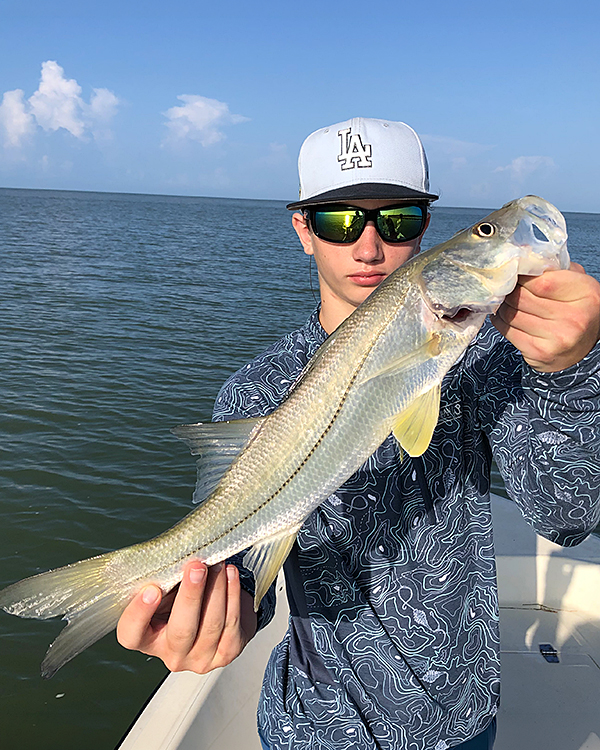
The strategies for finding and catching these fish rarely change. During high tides, they will congregate in schools and move into the shallows around, in, and under mangrove roots, offering protection while providing oyster clusters that house food supplies, including small shrimp and crabs. At low tide, look for them just off the mangroves in deeper holes.
During ‘Red October ’, it will not take long to figure out if the fish are in the area, as they will be very aggressive in cooler temperatures.
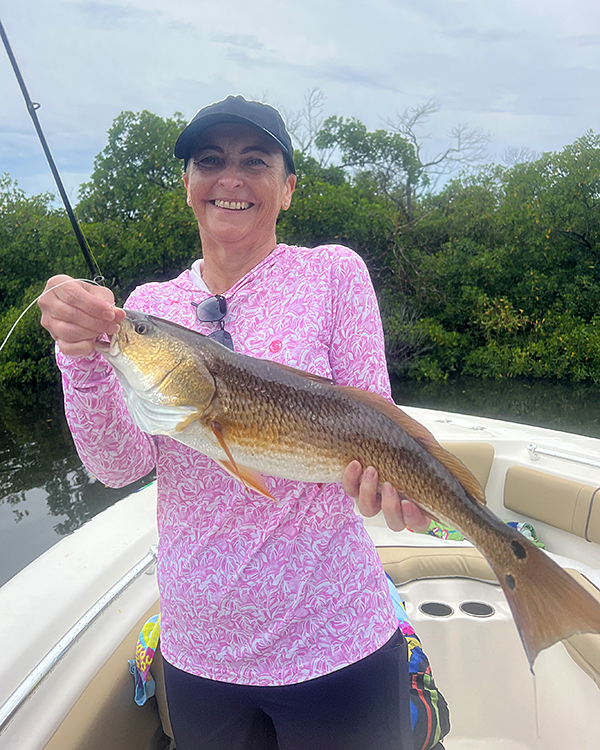
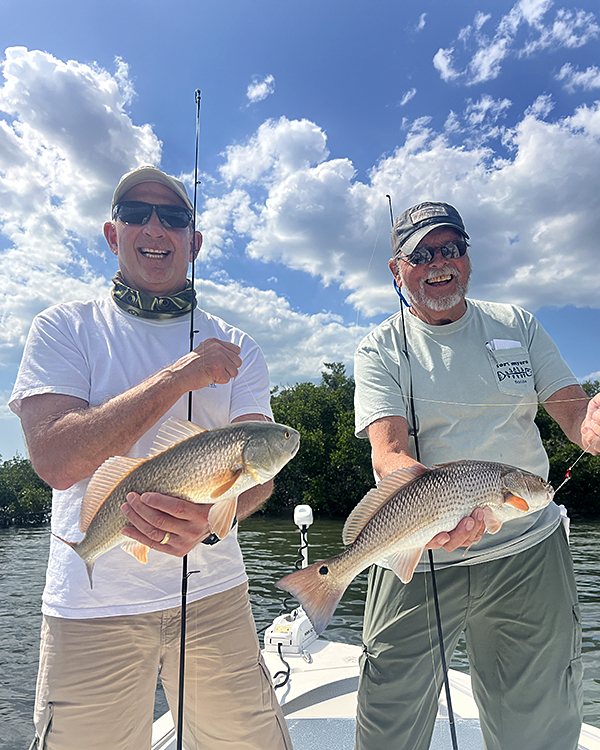
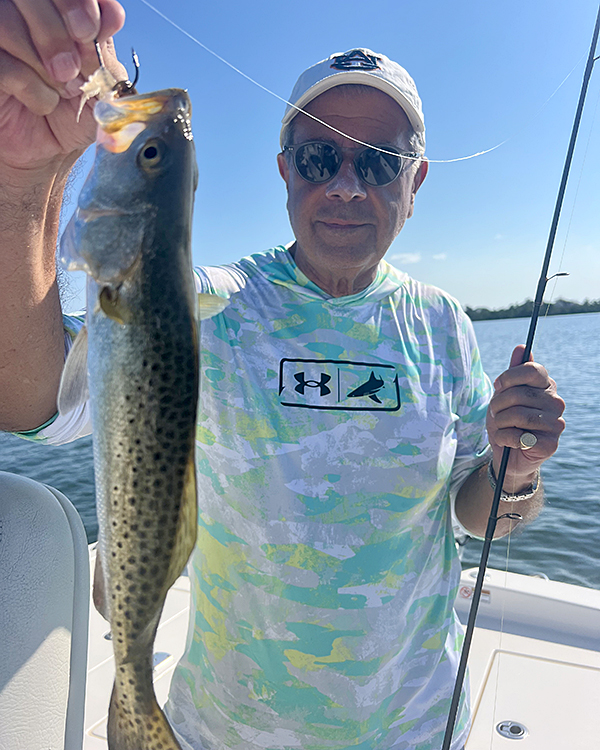
STRATEGIES FOR CATCHING REDFISH
1) Work the top half of the incoming and outgoing tides. Fish the higher monthly tides on both sides of a new or full moon cycle.
2) Be very quiet when moving into a spot you choose to fish, as bigger fish spook easily (they did not get big by being lucky). Do not hesitate to change locations after about 10 minutes to locate fish. If they’re not biting, they are probably not there.
3) Fish the point(s) of spoil islands and oyster beds. Fish the edges of and under the mangroves for results. Fish when the wind is from the southeast, south, or southwest, as southerly winds move water from the Gulf in and allow easier access to more remote and shallower areas. At two feet or more above high tide and with low winds, it won’t make any difference.
4) Utilize both artificial, live, and cut bait presentations mentioned above. However, one will need a trolling motor or a kayak when using artificial lures. Fish are not stupid. More than two or three casts in the same area will wear out an angler’s welcome.
5) Do not hesitate to revisit previous stops (spots) at different times and stages of the incoming and outgoing tides, as these fish will be on the move.
6) Do not arrive at a location too late during a new moon phase that will produce higher and stronger tides, as these fish will position themselves far back into the mangroves, preventing an effective presentation from getting close enough to them to attract a strike. A presentation over 6 feet from where they are may be too far. On the other hand, do not arrive too late to fish on an outgoing tide when the water column will be too low, as the fish will have moved out to the deeper water holes as the water retreats.
7) Use light spinning tackle (but not too light) with comparable rod strength for these fighting fish. 3500-4000 series reels with 10 to 15lb line tests will do the job. I suggest attaching a 2-3 ft. Fluorocarbon leader (30lb) to reduce the risk of a cut or break-off from mangrove/oyster clusters while hooking and landing the fish. Check your leader and line often for cuts and damage. Change the leader when necessary, or you may be sorry! Hook sizes range from 1/0 to 3/0, depending on the bait size.
This is Captain Terry Fisher of Fish Face Charters. Charter information may also be obtained by calling me directly at 239-357-6829, emailing fishfacecharters@yahoo.com, or visiting my website at www.fishfacecharters.com. I am also available (both inshore and offshore) as ‘Captain for Hire’ (by the hour) on your vessel for safety, navigation, fishing techniques, and fishing location instructions that will make your every boating and fishing adventure a success!